Austria's Licensed Platforms Reveal How Bonus Structures Shape Poker Decision-Making Alongside Roulette and Blackjack Dynamics
Ellis Friedrich · Oct 30, 2026

Austria's Licensed Platforms Reveal How Bonus Structures Shape Poker Decision-Making Alongside Roulette and Blackjack Dynamics
Reports released in October 2026 from Austria's licensed gaming operators show that structured bonus programs continue to influence player choices across poker, roulette, and blackjack tables on regulated digital platforms, and these patterns emerge clearly from aggregated transaction data collected throughout the 2025-2026 period. Licensed operators under the Austrian Gaming Act track how welcome bonuses, reload offers, and loyalty rewards alter wager sizes, session lengths, and risk thresholds, while regulators compile these figures to monitor compliance with responsible gaming standards.
Platform analytics indicate that players receiving matched deposit bonuses often extend their poker sessions by 25 to 40 percent compared with non-bonus play, because the additional funds lower the immediate cost of variance and encourage participation in higher-stakes cash games or tournament entries. Observers note that this shift appears most pronounced during evening peak hours when liquidity pools expand and bonus rollover requirements remain active.
Bonus Mechanics in Regulated Austrian Markets
Austrian licensing conditions require transparent bonus terms that specify wagering multipliers, eligible games, and contribution percentages, and these rules shape how operators design promotions that apply differently to poker versus table games. Data compiled by the Austrian Federal Ministry of Finance shows that poker bonuses typically carry lower contribution rates toward rollover targets, whereas roulette and blackjack wagers receive full or near-full credit, creating distinct incentive pathways for each format.
Operators adjust bonus caps and time limits in response to monthly performance reports, and figures from the third quarter of 2026 reveal that platforms offering tiered loyalty rewards see increased repeat deposits among players who mix poker with occasional roulette or blackjack sessions. These layered structures encourage strategic bankroll allocation rather than uniform betting across all titles.
Poker Decision-Making Under Bonus Influence
In poker environments, bonus funds function as an extended stack that players deploy selectively during early levels of tournaments or in cash-game blinds where fold equity calculations change, and studies from the University of Vienna's gambling research group document measurable increases in pre-flop aggression when participants hold active bonus balances. Hand histories aggregated across multiple licensed sites indicate that three-bet frequencies rise when players chase volume-based loyalty points tied to bonus tiers.
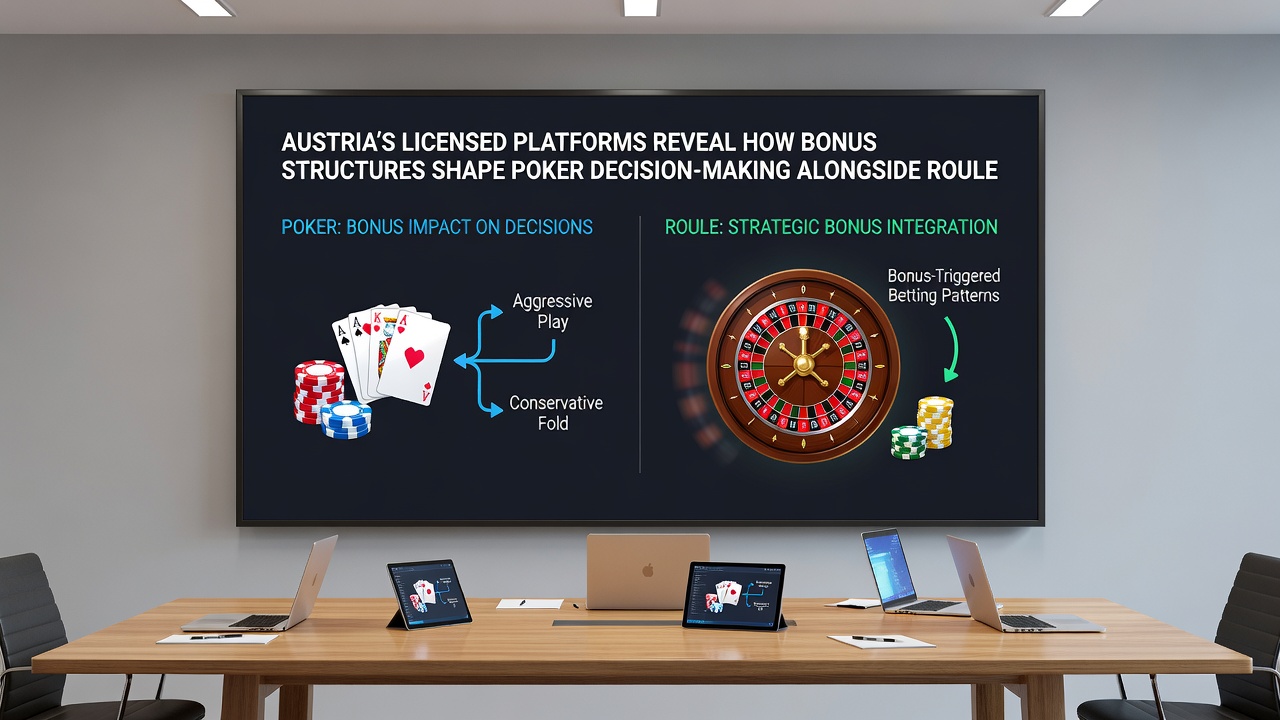
Players often reserve bonus-derived chips for speculative hands in position, while protecting their real-money stacks during premium confrontations, and this compartmentalization appears consistently in October 2026 platform logs. Tournament registration data further shows elevated late-registration volumes on days when reload bonuses activate, because the added equity offsets the compressed payout structures of shorter events.
Roulette and Blackjack Dynamics Alongside Bonus Pathways
Roulette sessions on Austrian platforms demonstrate steadier bet sizing when bonuses apply, with players gravitating toward outside bets that satisfy wagering requirements more efficiently than inside-number selections, according to transaction summaries published by the European Gaming and Betting Association. Blackjack participants, meanwhile, adjust their basic strategy deviations when bonus funds cover initial wagers, increasing double-down frequency on marginal totals because the effective house edge decreases during the promotional window.
Platform telemetry reveals that combined poker and table-game bonus users maintain longer overall play periods than single-game participants, because alternating between skill-based and chance-based formats helps satisfy distinct contribution rules without rapid depletion of the bonus pool. These behavioral patterns align with regulatory expectations for diversified game exposure and appear stable across demographic segments tracked in 2026 reports.
Interplay Between Formats and Regulatory Oversight
Cross-game bonus designs create measurable migration between poker tables and roulette or blackjack pits during single sessions, and operators report that such movement helps distribute risk across different house-edge profiles while still meeting player entertainment goals. Austrian authorities require clear separation between bonus-eligible and non-eligible play, which encourages platforms to implement real-time tracking tools that display remaining rollover progress alongside each game's contribution rate.
Industry reports from October 2026 highlight that platforms integrating these tools observe reduced dispute rates over bonus clearing, because players receive immediate visual feedback on how their poker folds, roulette spins, or blackjack splits advance or stall progress toward cashout eligibility. This transparency supports both regulatory compliance and sustained engagement across the licensed market.
Conclusion
October 2026 data from Austria's licensed operators confirm that bonus structures continue to guide decision frameworks in poker, roulette, and blackjack, producing distinct patterns of session length, bet sizing, and game selection that regulators monitor for fairness and player protection. These documented interactions between promotional mechanics and game-specific dynamics remain central to how licensed platforms operate within the current regulatory environment.