Tracing Probability Dynamics and Reward Pathways in Austrian Digital Card and Reel Formats
Sam Peters · Aug 25, 2026
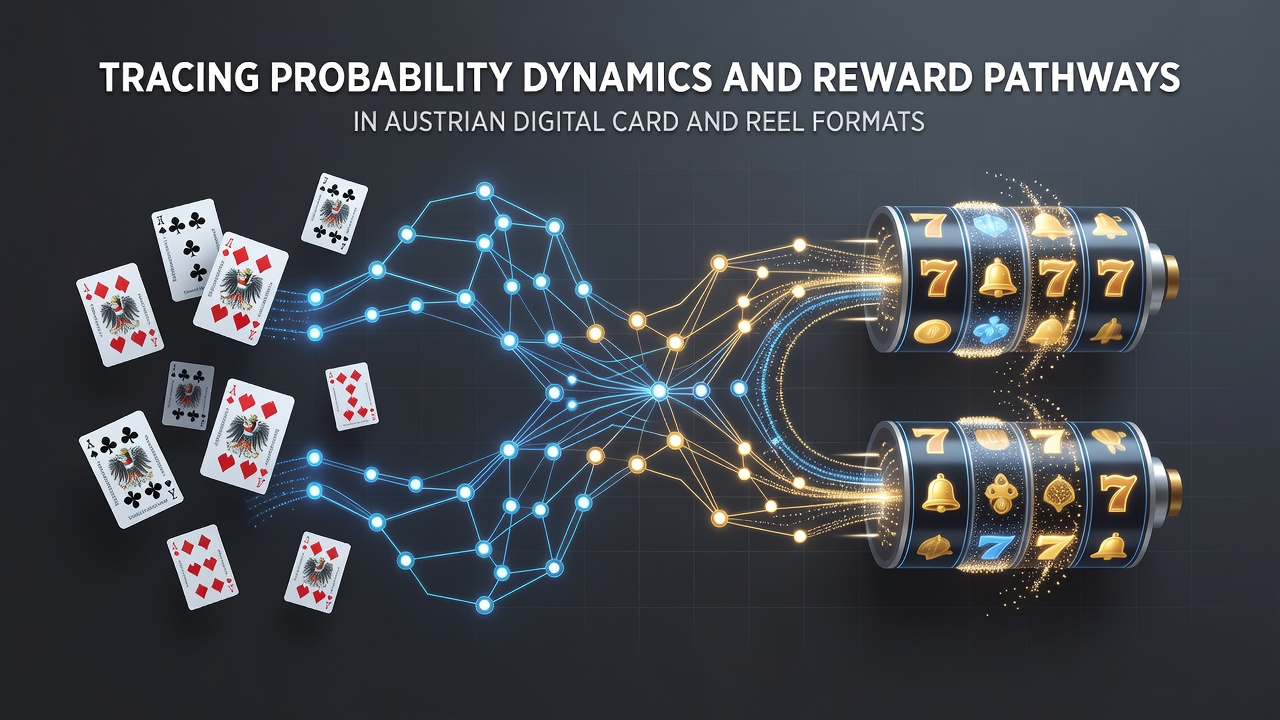
Tracing Probability Dynamics and Reward Pathways in Austrian Digital Card and Reel Formats
Digital reel formats in Austria operate through certified random number generators that determine symbol sequences on each spin, while card formats rely on shuffled virtual decks with fixed combinatorial outcomes. Austrian regulations require operators to maintain transparency in these systems, and data from licensed platforms shows consistent application of return-to-player metrics across both categories. Observers note that reel games often feature weighted reels where certain symbols appear at programmed frequencies, creating pathways from initial bet to final payout that follow strict mathematical rules.
Mechanics of Reel-Based Probability Structures
Reel formats calculate outcomes by mapping random values to reel positions, and each spin resolves independently without memory of prior results. Studies from European gaming research institutions indicate that Austrian digital slots typically publish RTP values between 94 and 98 percent, with the remaining percentage representing the house edge built into the paytable and reel strips. Reward pathways emerge when matching symbols align across active paylines, triggering multipliers or bonus rounds that scale the base wager according to predefined tables. Those who examine these systems find that variance levels dictate how frequently smaller wins occur versus rarer larger payouts, and August 2026 reports from Austrian monitoring bodies confirm ongoing audits of these parameters to ensure compliance.
Card Game Probability Pathways in Digital Environments
Digital card formats process probability through finite deck compositions, where each draw reduces the remaining possibilities and alters subsequent odds in real time. Blackjack variants common on Austrian platforms follow standard combinatorial calculations for dealer and player hands, while poker formats incorporate community cards that create branching decision trees based on pot odds and implied probabilities. Researchers at institutions across the EU have documented how these pathways integrate with player choices, such as hit-or-stand decisions, which shift expected values without altering the underlying random shuffle. Evidence from regulatory filings shows that Austrian operators must display these probabilities clearly, allowing users to trace how an initial hand leads to final resolution through sequential reveals.
Integration of RNG Certification and Reward Mapping
Certification processes in Austria involve third-party testing laboratories that verify RNG output against statistical standards for uniformity and unpredictability. Once certified, these generators feed directly into reward mapping algorithms that convert random results into credits or bonuses according to game rules. Data indicates that reel games often layer additional features like cascading symbols or expanding wilds onto core probability engines, extending reward pathways beyond single-spin resolutions. In card formats, similar layering appears through side bets or progressive jackpots that draw from separate probability pools while remaining linked to the primary game state. August 2026 updates to Austrian gaming oversight emphasized real-time monitoring of these integrated systems to detect any deviation from approved parameters.

Comparative Dynamics Across Formats
Reel formats generally exhibit higher volatility because symbol distributions allow for long sequences without wins followed by clustered payouts, whereas card formats deliver more predictable short-term outcomes due to known deck compositions. Yet both rely on the same foundational requirement under Austrian law that every possible outcome maintains its theoretical probability across large sample sizes. Industry analyses from sources such as the Gaming Standards Association highlight how digital implementations must preserve these dynamics exactly as tested, preventing any post-certification alterations that could shift reward pathways. Those who review compliance records find that operators submit regular reports detailing hit frequencies and payout distributions for both reel and card offerings.
Regulatory Oversight and Data Transparency Requirements
Austrian authorities mandate that probability information remains accessible, often through game rules or information buttons that outline RTP, hit rates, and bonus trigger conditions. This transparency extends to reward pathway descriptions that explain how progressive accumulations or multiplier chains resolve from base game triggers. Reports compiled by the Austrian Federal Ministry of Finance detail inspection results that confirm adherence to these standards across licensed platforms operating in 2026. External reviews from organizations like the Canadian Gaming Association provide comparative benchmarks showing similar certification approaches in other regulated markets, underscoring consistent global practices for digital probability handling.
Conclusion
Tracing probability dynamics reveals how Austrian digital card and reel formats maintain fixed mathematical structures from random input to final reward distribution. Reel systems emphasize weighted symbol frequencies and independent spins, while card systems leverage combinatorial depletion and decision branching. Regulatory frameworks ensure these elements undergo verification and public disclosure, creating traceable pathways that align with published metrics. Ongoing audits through 2026 continue to support this structure across all licensed operations.